


ISTE has a new name this year, International Society for Transforming Education, but the work stays the same: helping educators turn classroom realities into shared progress. ISTE 2026 brings four conversations into focus. Teachers trading frontline wisdom. Leaders building the trust that lets innovation take root. Technologists chasing student need instead of the next tool. And educators willing to tell the truth about what worked and what didn’t. Add a slate of real announcements, new standards, new certifications, new AI guidance, and a clear pattern emerges: this conference isn’t about watching change happen. It’s about deciding what you’ll carry back and share.
I won’t be there in person this year, but I’ll be covering the conference virtually for the Flipboard EDU Podcast.
1. Classroom Conversations: Frontline Wisdom
Real change starts in the classroom. Teachers know what’s working and what isn’t, and that knowledge is too valuable to stay siloed. At ISTE, the best conversations weren’t keynotes. They were teachers trading strategies in hallways, comparing notes on what actually moves students forward. That’s the model: educators as both learners and teachers, building a shared knowledge base in real time.
But classroom wisdom only travels as far as the leadership lets it.
2. Leadership Conversations: Vision and Connection
Leaders set the direction, but the good ones don’t set it alone. The strongest sessions at ISTE came from leaders who stayed open, who treated new ideas as input instead of interruptions. They built cultures where teachers could take risks without fear, and where student outcomes drove the decisions, not policy for its own sake. Vision without connection stalls. Connection without vision drifts. ISTE’s best leaders had both.
Once that culture exists, technology stops being a distraction and becomes a tool worth talking about.
3. Technology Conversations: Purposeful Integration
Every year, the line between technology and learning gets thinner. The educators getting it right aren’t chasing tools. They’re starting with a student need and working backward to the right tech, not the other way around. The most useful sessions at ISTE treated digital transformation as ongoing professional learning, not a rollout with an end date. That distinction matters more than any single platform.
And none of this works without one more thing: people willing to talk about it honestly.
4. Every Story Is a Plus: The Power of Sharing
Every educator’s path holds something worth sharing, a win, a failure, a fix that worked. Storytelling does what policy can’t: it builds empathy and pushes the field forward one honest account at a time. The educators who shared openly at ISTE weren’t selling a polished version of their work. They were handing the rest of us a shortcut. That’s the whole point of “every story is a plus.”
5. What’s New at ISTE 2026
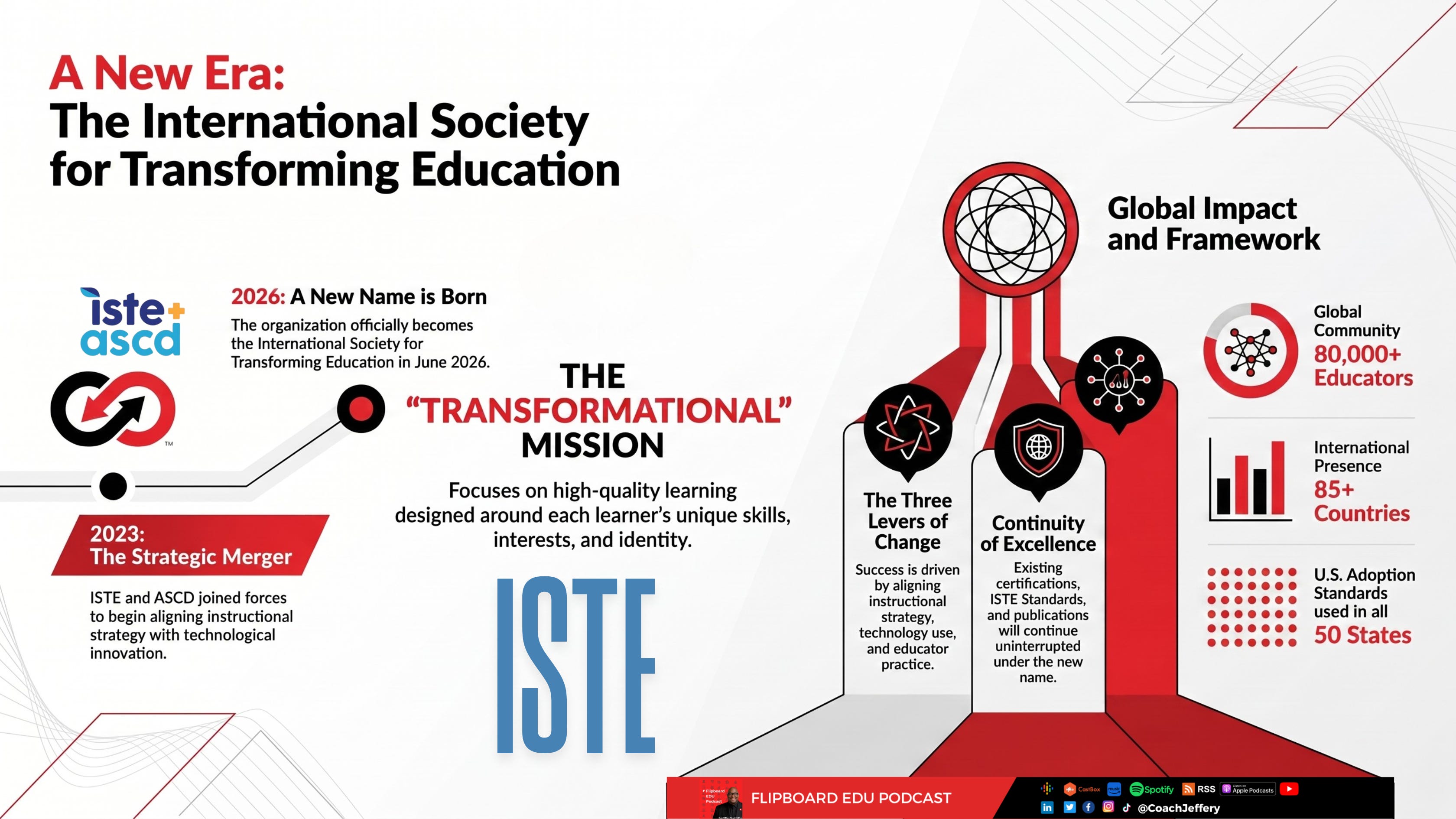
New name: International Society for Transforming Education (ISTE). The organization formed by the 2023 ISTE+ASCD merger has a new name, and the acronym stays ISTE. The nonprofit serves 80,000+ educators across 85+ countries, and the ISTE Standards are now adopted in all 50 states. The mission focus: guiding educators to create purposeful, high-quality learning experiences that reflect each learner’s skills, interests, and identities.
Safe & Purposeful EdTech Pledge. A new public commitment, launched in partnership with GreatSchools, that lets school districts get verified for getting edtech right for their students: clear technology policies, training leaders on effective tech use, investing in teacher PD, implementing vetted tools, and meaningful parent engagement.
From Screentime to Screen Value. A new guide for school leaders fielding hard questions about technology in the classroom. Is it helping or harming students? Why aren’t test scores improving? Should schools go back to paper? It draws on peer-reviewed studies, meta-analyses, and research syntheses across four areas: academic achievement, student well-being, access, and impact on instruction. It pairs the evidence with responses to the questions leaders hear most.
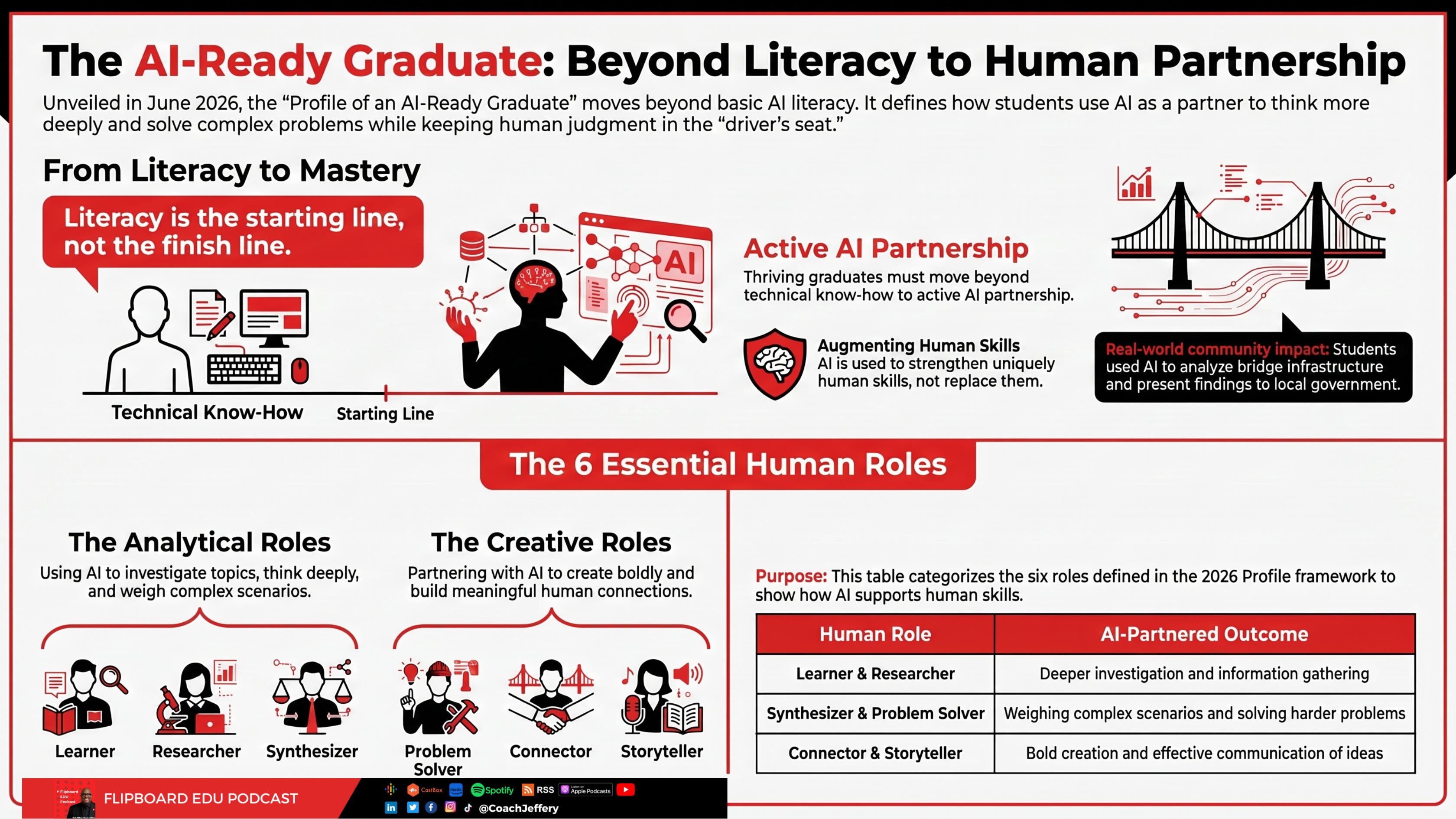
Expanded Profile of an AI-Ready Graduate. A research-backed framework giving schools shared language for how students can use AI to deepen human skills rather than replace them. It defines six roles students need for genuine human-AI partnership: Learner, Researcher, Synthesizer, Problem Solver, Connector, and Storyteller. It’s aligned to the ISTE Standards and the Transformational Learning Principles.
Google AI Educator Series. A new partnership with Google offering short, flexible, ISTE Standards-aligned AI training modules through the Google for Education Learning Center, free to every educator in the U.S.
ISTE+ASCD Learning Academy. A unified hub for all ISTE+ASCD online professional development, including the online portions of certification programs. One annual subscription opens unlimited access to 100+ learning experiences across AI readiness, instructional practice, technology integration, and digital citizenship.
EdTech Teacher Certification. A new credential for pre- and in-service teachers on using technology in safe and purposeful ways to support student learning, grounded in the ISTE Standards. With its launch, the existing ISTE Educator Certification will be renamed the ISTE EdTech Leader Certification to distinguish the two.
The Question for ISTE 2026
ISTE 2026 signals a readiness to listen, learn, and lead together. Through open dialogue, diverse stories, and purposeful integration of technology, educators can clarify the future and ensure every student’s success.
The question every attendee should carry into the conference: are you ready to turn your own story into someone else’s professional learning?
Listen to the Flipboard EDU Podcast for full coverage of ISTE 2026.
Collaborate. Communicate. Educate.